
Epitome of Rammed Earth Construction- Pure earthy vibes rejuvenates in this boutique resort
The Lalit Mangar, India
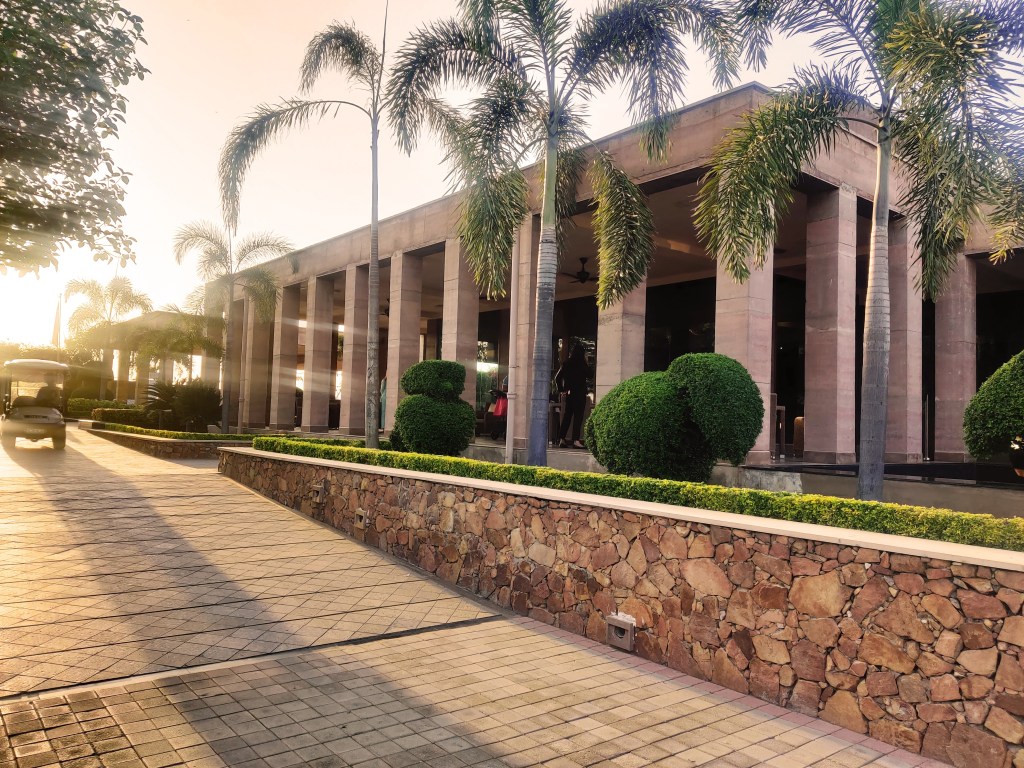
The Lalit Mangar is a luxury boutique resort located in the serene Mangar Bani Valley near Faridabad, Haryana. Considered one of the largest insulated rammed-earth buildings in the world, the resort is celebrated for its unique architectural approach, one that harmoniously merges with the rugged beauty of the Aravalli Hills. Its design philosophy centres on sustainability, local craftsmanship, and a deep respect for the natural environment.
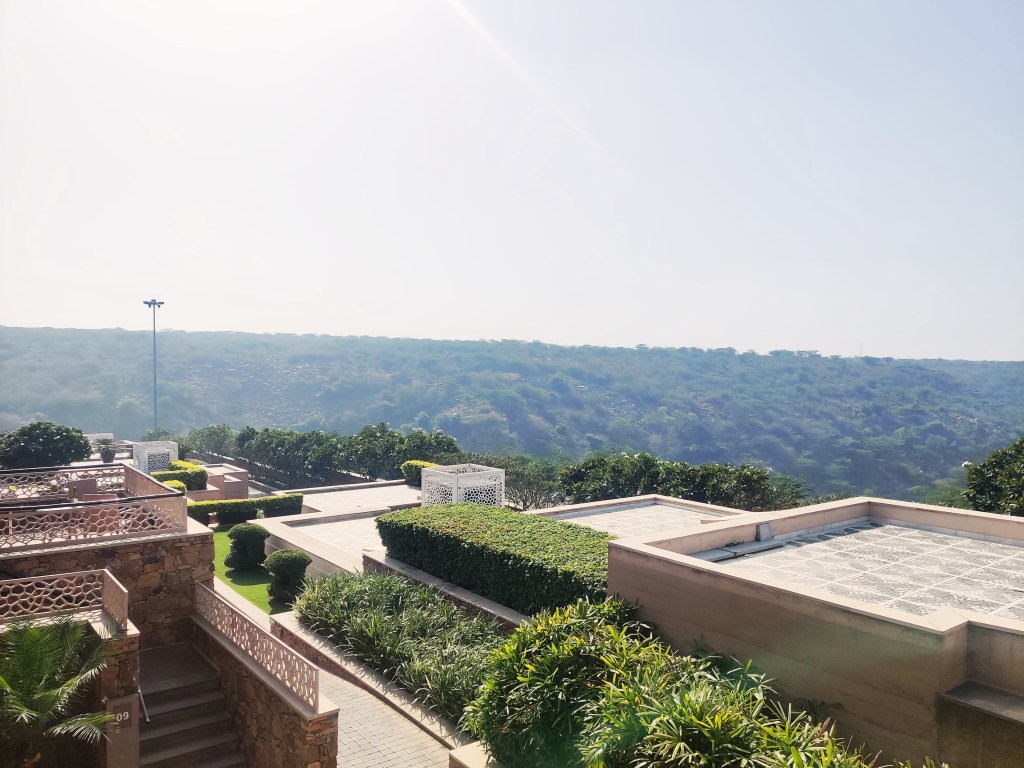
Here’s an overview of The Lalit Mangar, emphasizing its architecture, design, and key features.
Rammed Earth Architecture– One of the most remarkable aspects of the resort is its extensive use of rammed earth construction. This traditional technique offers excellent thermal mass, naturally keeping the interiors cool during summers and comfortably warm in winters. The warm, textured walls lend a rustic, earthy character that blends effortlessly with the rocky terrain surrounding the property.
Sustainable Design– The resort has been built using eco-friendly and locally sourced materials, ensuring minimal disturbance to the existing landscape. The architectural approach prioritises sustainability by integrating indigenous building techniques and reducing reliance on artificial cooling and heating systems.
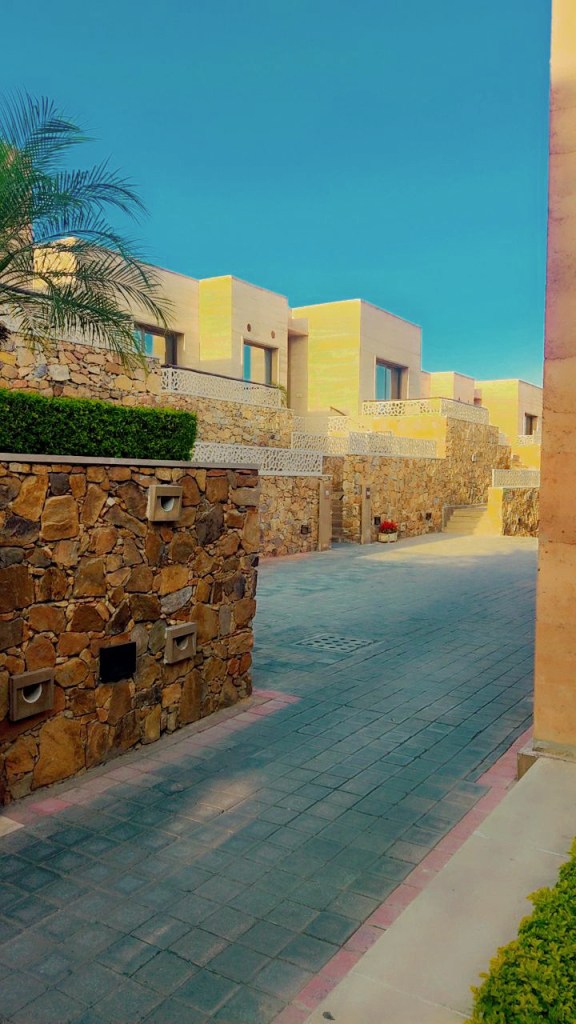
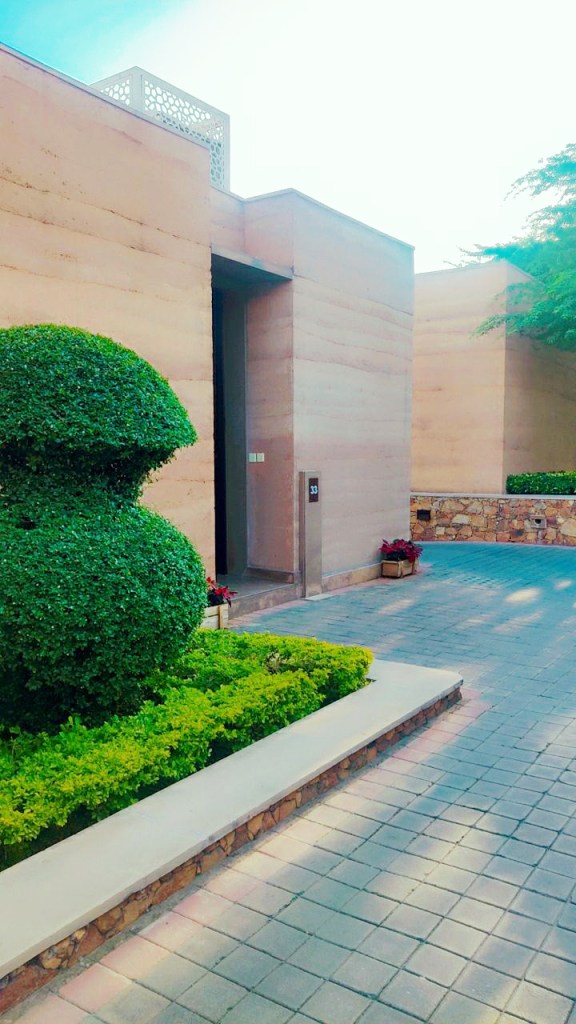
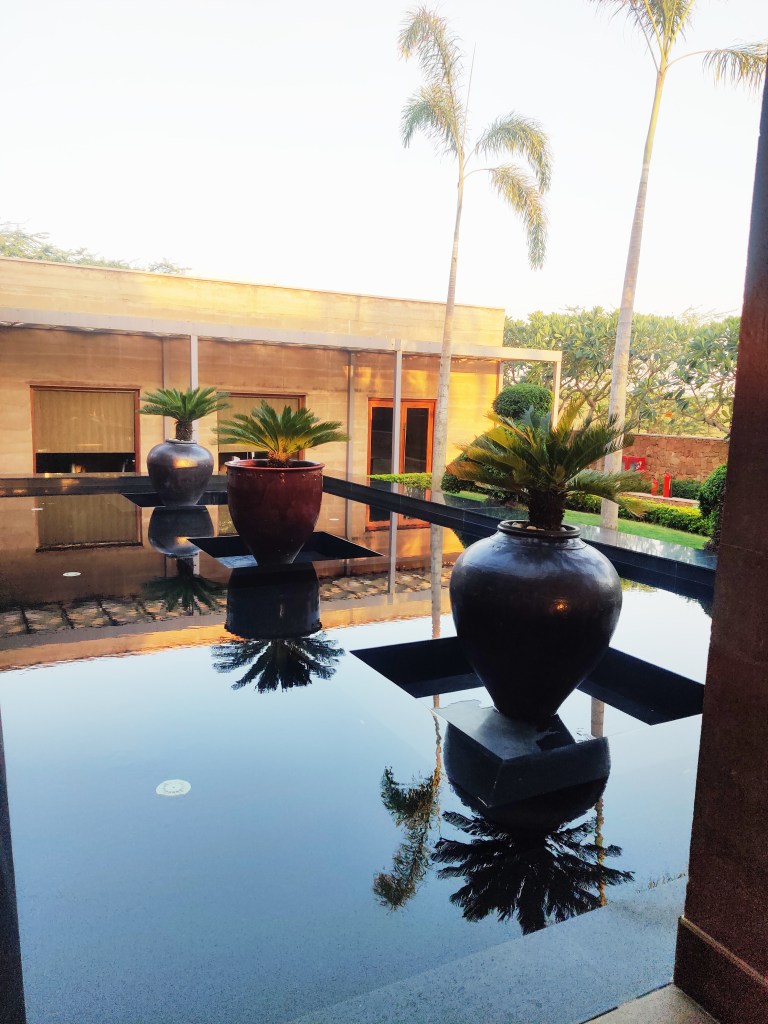
Natural Landscaping– The landscaping is designed to complement the valley’s topography and biodiversity. Indigenous plants and natural vegetation are preserved and woven into the layout, allowing the built environment to blend seamlessly with Mangar Bani’s ecological richness.
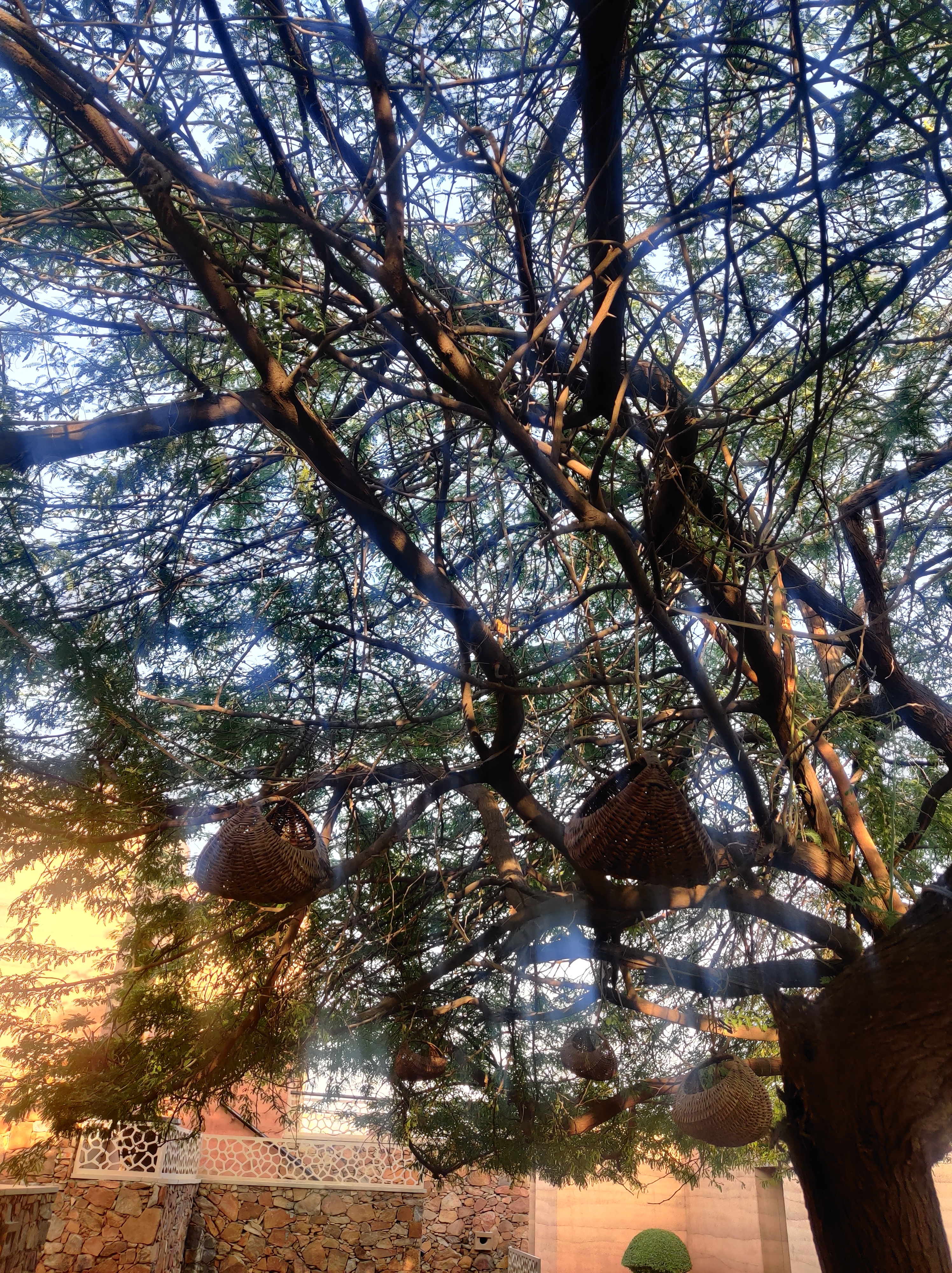
Local Influence– The interiors reflect the cultural and traditional essence of the region. Local crafts, natural materials, and handmade elements are incorporated throughout the spaces to create a warm, authentic ambience. This thoughtful detailing celebrates regional craftsmanship while grounding the design in its cultural context.
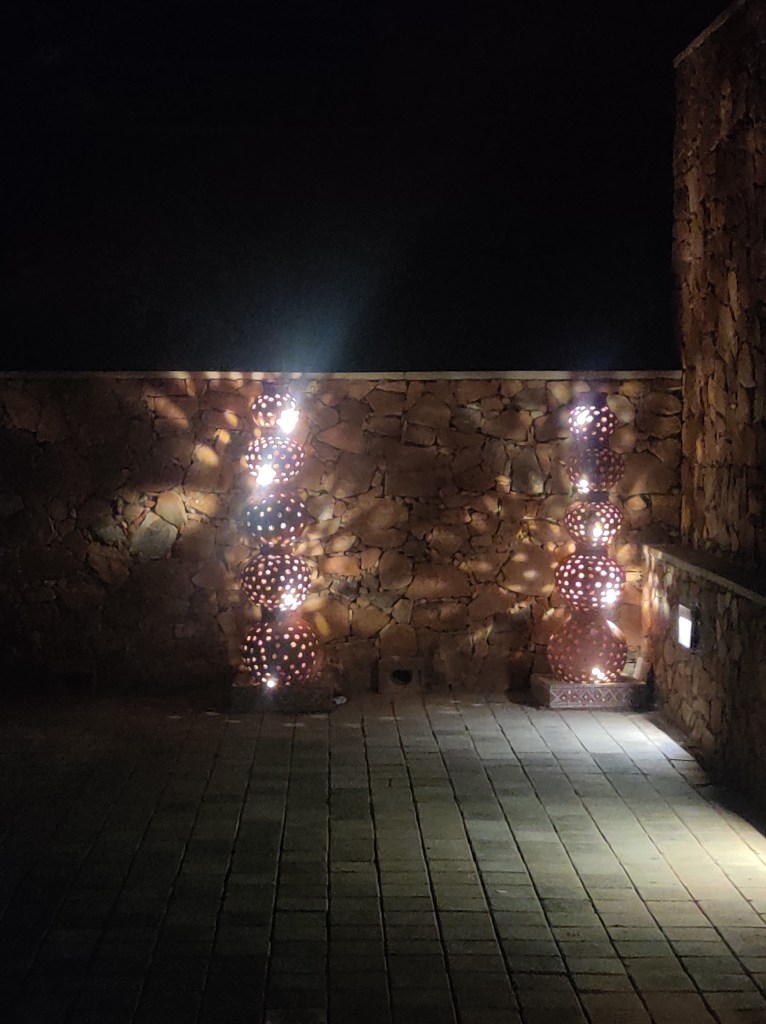
Use of Jaalis– Traditional Indian jaalis (lattice screens) are used to enhance natural ventilation, provide shade, and maintain cooler indoor temperatures. These architectural elements reduce the need for energy-intensive air conditioning while adding a beautiful interplay of light and shadow.
Earth-Toned Color Palette– The overall colour scheme draws from the surrounding landscape—soft browns, muted ochres, and natural stone shades. These tones create a calming visual harmony and allow the architecture to merge with the valley rather than stand apart from it.

